
BIOTECH
MEDIA / EVE MUSE
Dr. Hsieh Discusses Gradual Aesthetic Care and AI Assessment
Original article published September 18, 2025
繁中 | EN
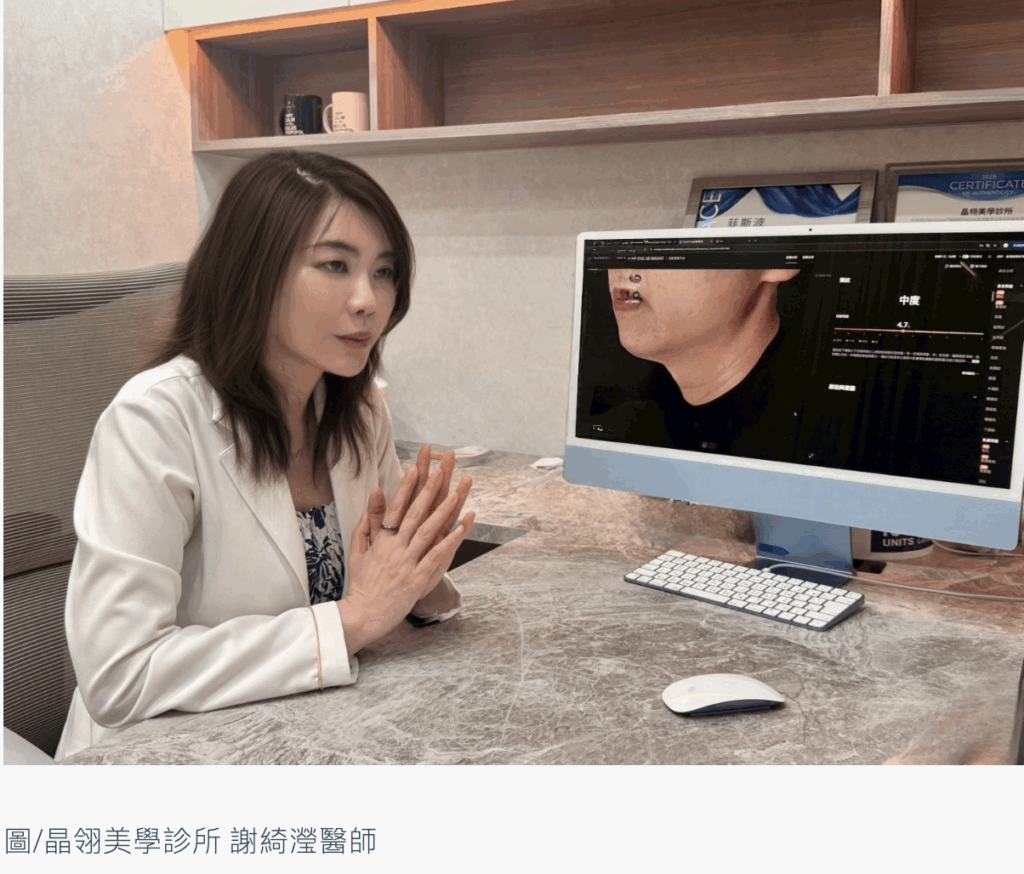
Dr. Hsieh (謝綺瀅) of 晶翎美學診所 describes a shift toward gradual, natural-looking improvement in this HERBEST feature. Rather than aiming for a rapid change of identity, the discussion brings together injectable care, skin stability and objective image records.
Understanding the proposed treatment
The article discusses Profhilo, known in Taiwan as “逆時針,” and its fluid hyaluronic-acid formulation. Dr. Hsieh describes a five-point approach on each side for facial or neck treatment and discusses collagen and elastin remodeling as the treatment rationale presented in the interview.
Early concerns such as dryness, pores, dullness and reduced firmness are considered alongside the patient’s expectations and tolerance for recovery time. The physician presents gradual improvement as a planning approach, rather than an immediate guarantee.
Assessing the face and the neck separately
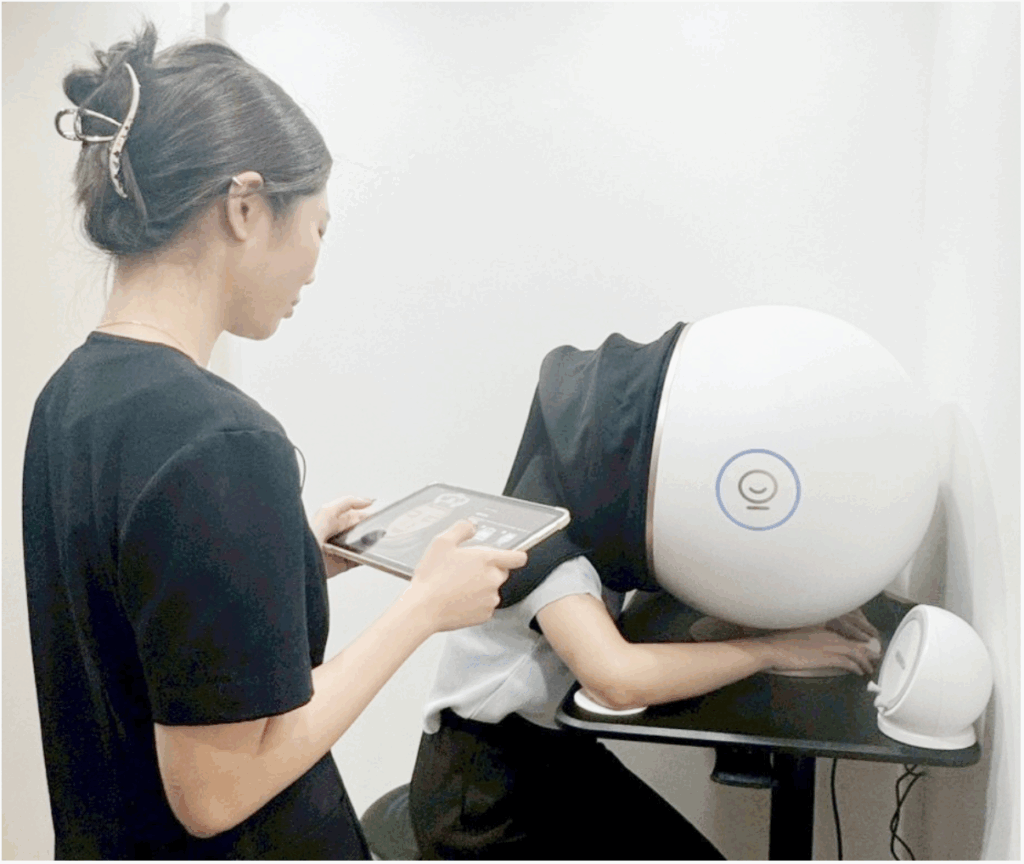
EVE MUSE is introduced as a way to review tone uniformity, pores, texture, redness, firmness and facial proportions. Dr. Hsieh emphasizes that a report can support a decision to delay a procedure and first address unstable or sensitive skin. A redness pattern may change the order of care.
The feature describes a 33-year-old flight attendant whose facial skin-age result was 31, while her neck showed more noticeable wrinkles and a moderate loss of firmness. The physician therefore prioritized the neck instead of assuming that a single facial score represented every area.
The reported plan was discussed in three phases: awakening, activation and maintenance. The case described initial changes around ten days, with a broader assessment over two to three months. These timeframes relate to that report and do not establish the same course for every patient.
Long-term records and professional judgment
Younger patients may focus on a stable foundation, while more mature skin may prompt discussion of combinations with energy or light-based procedures. Dr. Hsieh describes a five-level structural framework involving the epidermis, superficial fat, muscle, ligaments and periosteum when explaining how she approaches assessment.
Before-and-after reports help patients participate in the discussion and give the physician an additional reference over time. The feature concludes that AI-supported tracking is most useful when interpreted in the context of the individual, their skin stability and a clinician’s judgment.
Source: HERBEST’s original feature with Dr. Hsieh (謝綺瀅). Original article images retained.
Images from the Original Article
BIOTECH
Where expertise and aesthetics meet.
Linkou Headquarters
Taichung Office
This website is intended for medical and biotechnology professionals. Members of the public should consult a qualified healthcare provider.
© 2026 HERBEST BIOTECH