
BIOTECH
MEDIA / AI & MESO INFINITY
Dr. Lee Discusses AI Assessment and Preventive Skin Care
Original article published June 24, 2025
繁中 | EN
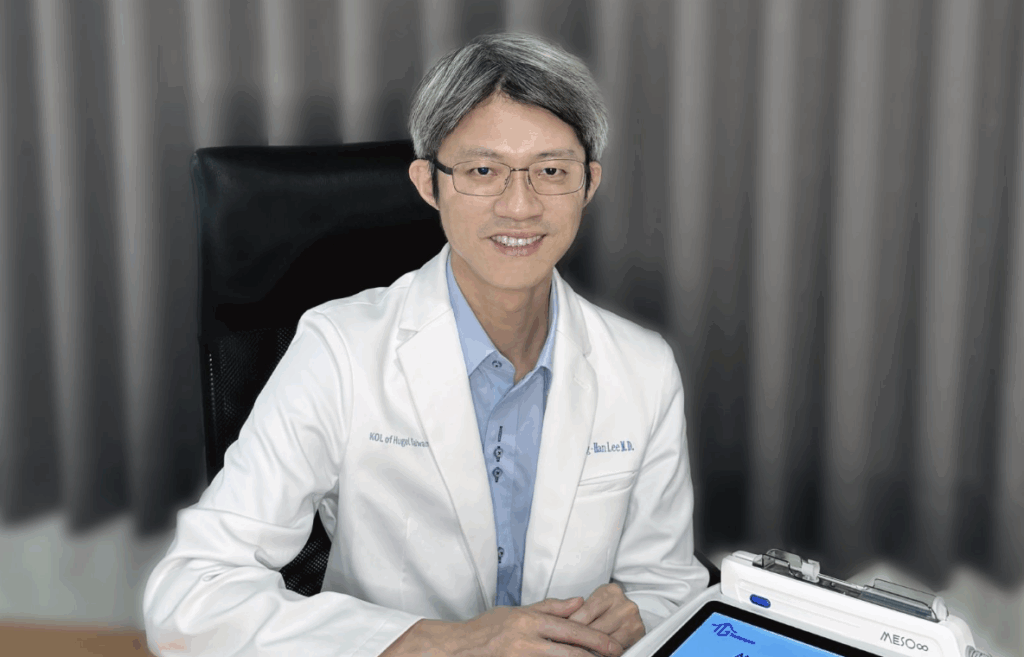
Dr. Lee (李政翰) of 台大翰穎皮膚科 discusses personalized and preventive care in this feature. His approach combines clinical experience, imaging data and a delivery method selected for the current skin condition.
Data needs clinical context
Visible, UV and near-infrared imaging provide different views of pigment, dryness and pores. Cloud-based records make it possible to compare visits, but Dr. Lee emphasizes that medication, age, daily habits and hydration can affect interpretation. An AI report does not replace the physician’s assessment.
The original discusses low-molecular-weight hyaluronic acid, ceramides and peptides, as well as the differing tolerance of oily and sensitive skin for retinoid-based care. After energy procedures, ingredient choice must also reflect irritation and recovery.
Matching delivery and ingredients
Meso Infinity 3.0 is described as combining volcanic-microcrystal water channels with electroporation. The interview reports temporary channels around 0.03–0.2 mm and presents the approach as needle-free; those figures are the article’s technical explanation rather than an independent depth measurement for every application.
Examples include hyaluronic acid, vitamin B5 and ceramides for dryness; centella and soothing formulations for redness; zinc PCA and witch-hazel-related care for oil and pores; and exosome formulations in discussions of collagen-related concerns. The examples belong to the physician’s individualized planning, not a universal ingredient prescription.
Order and timing matter
Dr. Lee discusses cleansing, using water-based products before oil-based products, sun protection and avoiding unnecessarily complex or fragranced routines. Timing and layering can be as important as adding more products.
After laser procedures, the article emphasizes barrier recovery, attention to redness or peeling, and avoiding irritating ingredients. A 72-hour timing example and the physician’s own experience of cheek redness are discussed, with the appropriate interval determined by clinical review.
The feature also looks ahead to using longitudinal data to discuss patterns such as stress-associated pigmentation or sleep-related changes in tone. Its conclusion remains practical: predictive tools support care most effectively when combined with professional judgment and individual circumstances.
Source: HERBEST’s original feature with Dr. Lee (李政翰). Original image retained.
BIOTECH
Where expertise and aesthetics meet.
Linkou Headquarters
Taichung Office
This website is intended for medical and biotechnology professionals. Members of the public should consult a qualified healthcare provider.
© 2026 HERBEST BIOTECH