
BIOTECH
EXPERT PERSPECTIVES / EVE MUSE
Dr. Sangsu Lee on AI Skin Analysis and Personalized Aesthetic Medicine
Original article published 25 June 2026
繁中 | EN
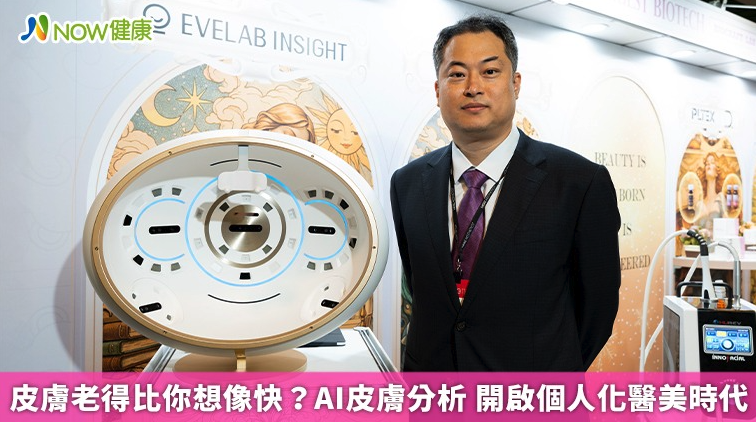
Is Your Skin Aging Faster Than You Think? AI Skin Analysis Opens a New Era of Personalized Aesthetic Medicine
As AI enters aesthetic medicine, skin assessment is moving beyond visual observation and clinical experience toward more precise, measurable data analysis. At AMWC Asia–TDAC 2026, Dr. Sangsu Lee of Korea’s Mirabel Clinic explained that systems such as EVE MUSE can help physicians evaluate skin concerns more scientifically. He emphasized that AI can improve physician–patient communication and bring data-based personalized aesthetic care closer to clinical practice. In his view, a consultation model combining professional accuracy and transparency will shape the industry’s future.
Original report: NOW Health, Lin Yu-min, Taipei, 13 May 2026.
Seeing What the Eye Cannot: The Advantages of AI 3D Skin Analysis
Dr. Lee noted that AI 3D skin analyzers are still an emerging technology in Korea and are not yet widely adopted by clinics, although physician interest is high. Image analysis can generate reports covering pigmentation distribution, estimated skin age, laxity and facial angles. These findings support treatment planning and help patients understand their skin condition.
AI analysis can also ease communication and improve efficiency. Traditional assessment often relies on visual observation followed by an explanation of changes before and after treatment. Such comparisons can be subjective, and patients may struggle to perceive the differences. Physicians may therefore spend considerable time explaining changes in the jawline or pigmentation.
Objective Data for Following Lifting and Biostimulatory Treatments
Scores, color comparisons and charts help quantify skin condition and make less obvious changes more visible. Underlying pigmentation, pore changes and aging trends may not be immediately apparent to the naked eye; image analysis provides additional information for assessment.
Dr. Lee identified treatment follow-up as another important use. Patients often notice changes after fillers, facial volume enhancement or surgery more easily. In contrast, changes following biostimulatory or energy-based lifting procedures may emerge over one to three weeks and remain subtle, making them harder for patients to recognize immediately.
Data and Personalized Care
Dr. Lee shared that estimated skin age can leave a strong impression on patients. For example, a 35-year-old patient whose analysis reports an estimated skin age of 37 may be surprised and become more interested in discussing treatment recommendations.
He considers the scale of available data one of AI analysis’s main advantages. As datasets become more complete, they may support more precise treatment guidelines—a capability that he regards as difficult to achieve with traditional analyzers.
Looking ahead, Dr. Lee expects AI skin analysis to move toward increasingly personalized care, with an individual skin record and treatment plan for each patient. He sees analysis, planning and outcome assessment as potential supporting tools for aesthetic consultations and clinical follow-up.
BIOTECH
Where expertise and aesthetics meet.
Linkou Headquarters
Taichung Office
This website is intended for medical and biotechnology professionals. Members of the public should consult a qualified healthcare provider.
© 2026 HERBEST BIOTECH